Jaipur’s Teej Procession
We are in the month of July, and it’s known as Monsoon season in India. In this blog I am going to share a beautiful festival, which is dedicated to Goddess Parvati and Monsoon season. This day is auspicious, because it was the day that Lord Shiva and Parvati were reunited. This festival is known as Teej festival, and it takes place on the third day after new moon night in the month of Shravana. Teej festival is mostly celebrated in the state of Rajasthan. Teej is not only a religious festival, but also a festival to celebrate the coming of rains, for renewal and rejuvenation. These rains bring life, in the dry a hot desert of Rajasthan. More than 65% of India’s population make their livelihood from agriculture, so it is very important to have good monsoon to get good crops. According to Gregorian calendar this year it will be celebrated on July 22, 2012.
Women have an important role in Indian society. Hinduism is vastly practiced in India. It is a way of life and a philosophy. According to the Hindu concept, this universe is a creation of the supreme mother energy ADI SHAKTI, meaning ultimate energy and power, which provides energy and power to all living beings. On this festival, women worship goddess Parvati (an incarnation of ADI SHAKTI). Parvati symbolizes many different virtues by Hindu traditions; martial felicity, fertility, devotion to spouse and her family, as well as religious belief. She has all the qualities which an ideal woman should have. Perhaps, this is the reason why she has many female followers. There are several different occasions, throughout the year, on which women celebrate festivals in honor of goddess Parvati.
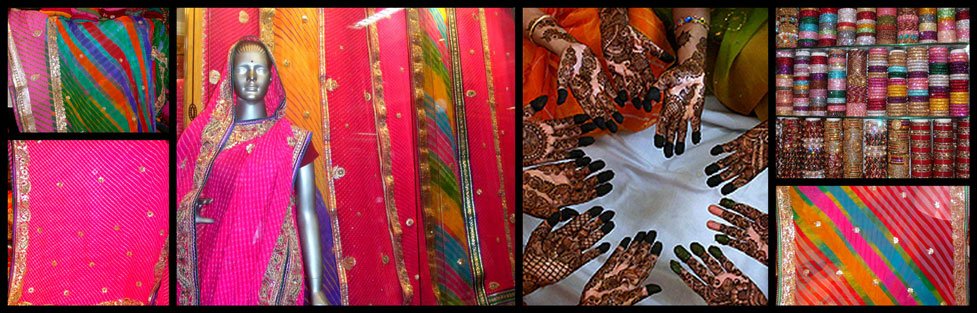
Festival preparations of Sarees, Bangles and Heena painted hands
Jaipur is the capital of Rajasthan state, in India, where this festival is celebrated every year on a very big scale. The Jaipur Royal family organizes a large elaborate procession for two days. With lots of tourists coming from around the world witness this elaborate Teej procession at the City Palace, residence of present King of Jaipur.
Teej’s three day festival’s first day, is known as Sinjahara, second day is known as Teej and third day is known as Badi Teej.
Sinjahara is the first day of the festival. We can call it preparation day. On this day women and girls paint their hands with Heena (Heena is a paste made by heena tree leaves. When you apply it on your skin, it leaves stain which can last from 8 to 10 days). Newly engaged girls, yet to be married, receive gifts from their future in-laws. The gifts consists of Lehariya Saree (a special tie and dye dress), Jewelry, Bangles, Make-up, Heena and Ghevar (a special Teej sweet). Married women also get some gifts from their mothers and mother-in laws.
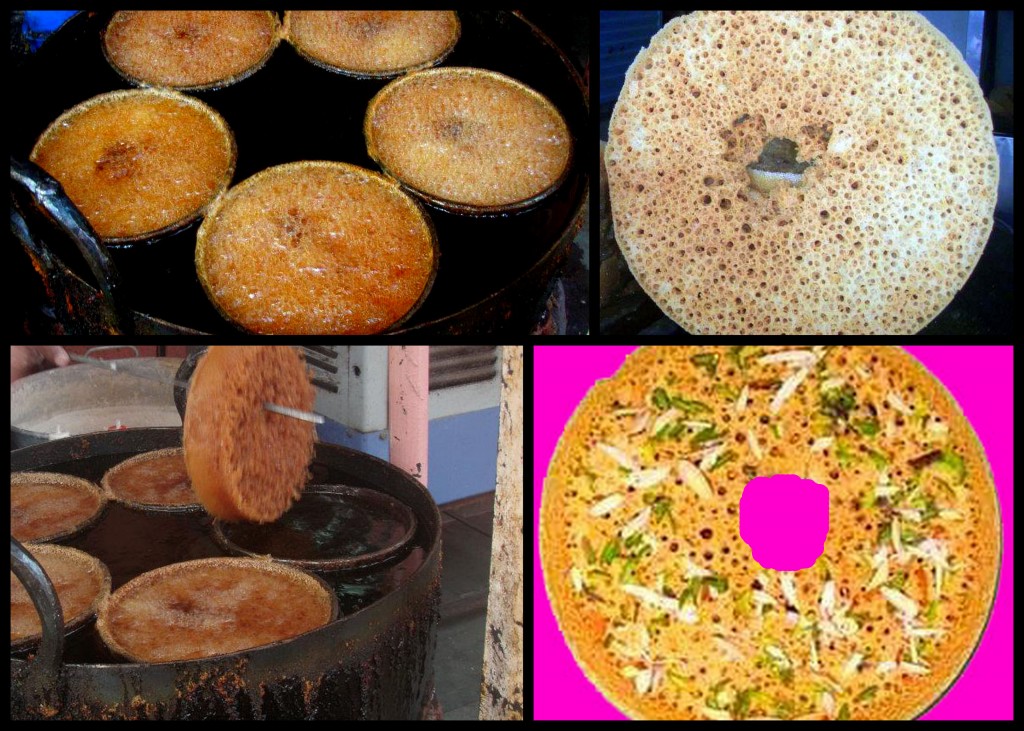
The making of Ghevar sweet
Second day is Teej festival. All married women, and newly engaged girls, dress up in their Lehariya dresses. They worship goddess Parvati. Mothers of married women invite them for special feast with their family. They always serve special and traditional vegetarian food. Ghevar (a crisp fried cake and dipped in saffron, cardamom sugar syrup) and Kheer (milk and rice pudding, flavored with almonds, raisins, cardamom, pistachio and saffron), are the special sweets served alongside Pooris (Bread), two or three types of vegetable preparations, gram flour dumplings, Raita (yogurt flavored with cucumber, tomatoes and onion).
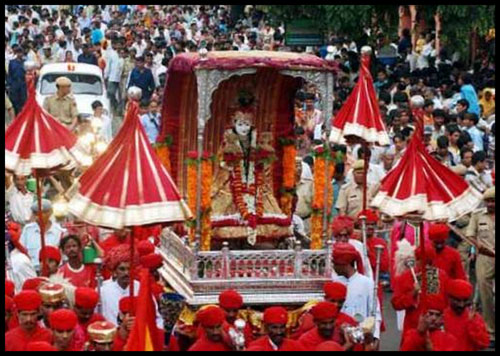
In evening the festival’s biggest event starts in the center of Jaipur city. The large statue of goddess Parvati, is worshipped by the women of Jaipur’s Royal family inside the palace. This is the main attraction. For the procession, the statue is placed in a gold and silver palanquin, to be carried by City Palace Royal Guards. This procession of Goddess Parvati, is followed by folk dancers, musicians, marching bands, decorated elephants, horses, and bullock carts. It is amazing to be a part of and witness this elaborate procession.
Travel Tip
The government of Rajasthan state arranges a special sitting area for foreign tourists, for comfortable viewing. If you are in India around that time of the year, you should try to make arrangements to attend and experience this festival.
You must try the special Teej sweet, GHEVAR.
Special tie and die pattern, called LEHARIYA, is only available at this time of year in the shops.
Loved reading your blog. India is an amazing country. When people look at the wonderful pictures and read your great text and explanation they have to be excited. No one can run a better tour to India than you two. I am sure, that many people soon will realize that.
Good luck.
Wonderful description & pictures. You have given such great insight into what must surely be a colorful display of beauty for all the senses. Sounds like happy times of bonding with family, cooking & eating wonderful foods, and enjoying traditional acivities and music at a Teej Festival. It sounds like a wonderful time to visit India even if a monsoon comes. The country has so much variety to see & enjoy. Always something to celebrate!