
Monthly Archives: July 2012

Teej festival

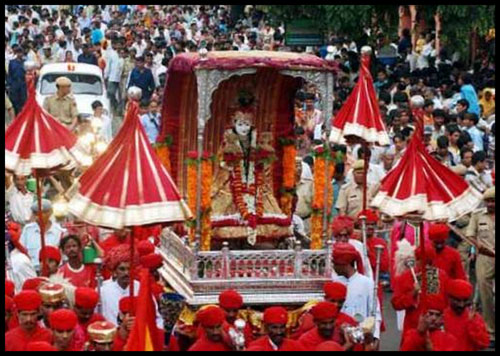
 Jaipur’s Teej Procession

We are in the month of July, and it’s known as Monsoon season in India.  In this blog I am going to share a beautiful festival, which is dedicated to Goddess Parvati and Monsoon season.  This day is auspicious, because it was the day that Lord Shiva and Parvati were reunited.  This festival is known as Teej festival, and it takes place on the third day after new moon night in the month of Shravana. Teej festival is mostly celebrated in the state of Rajasthan.  Teej is not only a religious festival, but also a festival to celebrate the coming of rains, for renewal and rejuvenation.  These rains bring life, in the dry a hot desert of Rajasthan.  More than 65% of India’s population make their livelihood from agriculture, so it is very important to have good monsoon to get good crops. According to Gregorian calendar this year it will be celebrated on July 22, 2012.

Women have an important role in Indian society.  Hinduism is vastly practiced in India.  It is a way of life and a philosophy.  According to the Hindu concept, this universe is a creation of the supreme mother energy ADI SHAKTI, meaning ultimate energy and power, which provides energy and power to all living beings.  On this festival, women worship goddess Parvati (an incarnation of ADI SHAKTI). Parvati symbolizes many different virtues by Hindu traditions; martial felicity, fertility, devotion to spouse and her family, as well as religious belief.  She has all the qualities which an ideal woman should have. Perhaps, this is the reason why she has many female followers.  There are several different occasions, throughout the year, on which women celebrate festivals in honor of goddess Parvati.
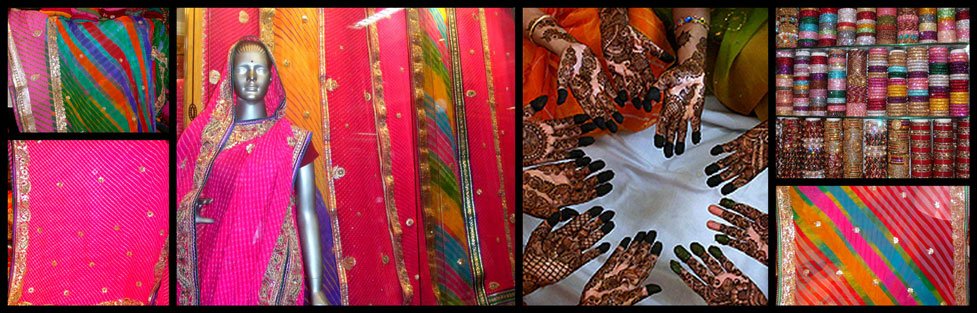
Festival preparations of Sarees, Bangles and Heena painted hands

Jaipur is the capital of Rajasthan state, in India, where this festival is celebrated every year on a very big scale.  The Jaipur Royal family organizes a large elaborate procession for two days. With lots of tourists coming from around the world witness this elaborate Teej procession at the City Palace, residence of present King of Jaipur.

Teej’s three day festival’s first day, is known as Sinjahara, second day is known as Teej and third day is known as Badi Teej.

Sinjahara is the first day of the festival.  We can call it preparation day.  On this day women and girls paint their hands with Heena (Heena is a paste made by heena tree leaves. When you apply it on your skin, it leaves stain which can last from 8 to 10 days).  Newly engaged girls, yet to be married, receive gifts from their future in-laws.  The gifts consists of Lehariya Saree (a special tie and dye dress), Jewelry, Bangles, Make-up, Heena and Ghevar (a special Teej sweet).  Married women also get some gifts from their mothers and mother-in laws.
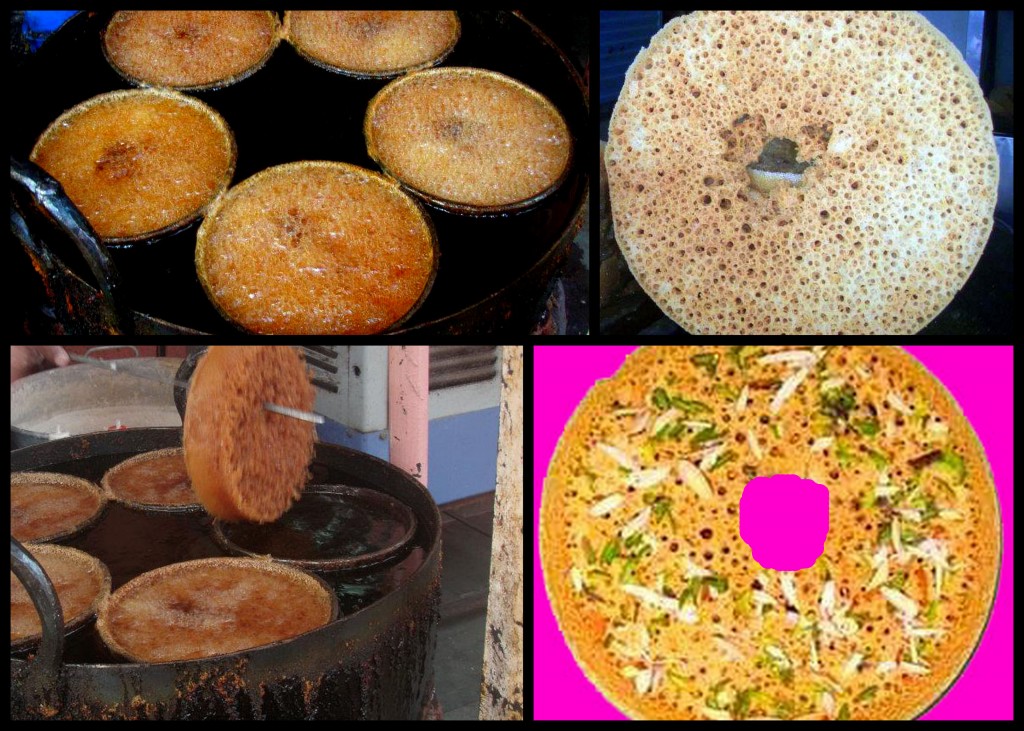
The making of Ghevar sweet

Second day is Teej festival.  All married women, and newly engaged girls, dress up in their Lehariya dresses.  They worship goddess Parvati. Mothers of married women invite them for special feast with their family.  They always serve special and traditional vegetarian food.  Ghevar (a crisp fried cake and dipped in saffron, cardamom sugar syrup) and Kheer (milk and rice pudding, flavored with almonds, raisins, cardamom, pistachio and saffron), are the special sweets served alongside Pooris (Bread), two or three types of vegetable preparations, gram flour dumplings, Raita (yogurt flavored with cucumber, tomatoes and onion).

In evening the festival’s biggest event starts in the center of Jaipur city.  The large statue of goddess Parvati, is worshipped by the women of Jaipur’s Royal family inside the palace.  This is the main attraction.  For the procession, the statue is placed in a gold and silver palanquin, to be carried by City Palace Royal Guards.  This procession of Goddess Parvati, is followed by folk dancers, musicians, marching bands, decorated elephants, horses, and bullock carts.  It is amazing to be a part of and witness this elaborate procession.

Travel Tip

The government of Rajasthan state arranges a special sitting area for foreign tourists, for comfortable viewing.  If you are in India around that time of the year, you should try to make arrangements to attend and experience this festival.

You must try the special Teej sweet, GHEVAR.

Special tie and die pattern, called LEHARIYA, is only available at this time of year in the shops.
 

Why do Indian festivals change dates every year?

Detailed Indian Calendar

India is a land of 5000 year old civilization, with many different cultures, customs, spirituality, philosophy, people and languages. It is the land of celebrations. Fairs and festivals are the cultural heritage and spirit of Indian society to this day. India has seven major faiths. It has a large agricultural population and a rich historical background. All these Indian fairs and festivals represent people from diverse background, regions, communities and religions. The festivities are marked by folk dances, music played on a variety of local instruments, and traditional food. All festivals have their own spectacle, with important characteristics. There are religious festivals, cattle fairs and seasonal festivals celebrations throughout the year. Indian festivals encompass processions in the streets, decoration of homes and sacred places such as temples, folk song and dance performances. Most religious festivals have elaborate prayers, traditions, customs and rituals attached to them.

Indian festivals don’t have fixed dates because they don’t follow the Gregorian calendar.

The Indian Calendar system and the Gregorian calendar system
The western calendar is known as Gregorian calendar. It is based on the sun, in which, one year is the time required for the earth to complete one round around the sun. Earth takes 365 days, 5 hours, 48minutes and 46seconds to complete a rotation around the sun. In our one year we have 365days, but these extra hours, minutes and seconds every year, create an extra day every four years. The year with an extra day is known as leap year.

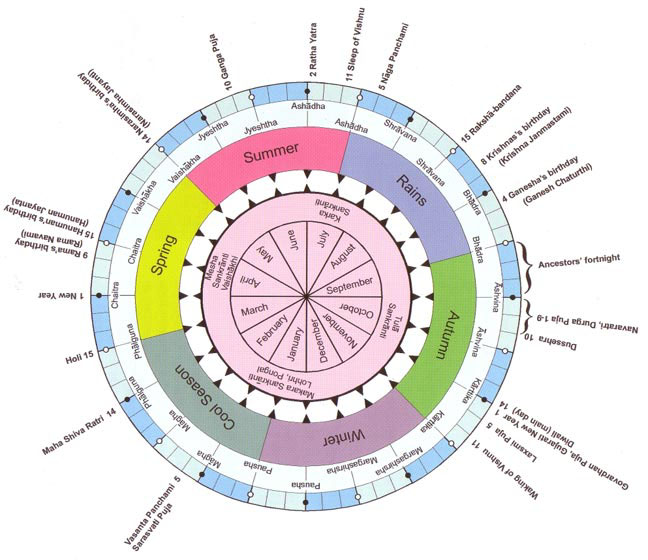
The Hindu calendar was founded in the Vedic times, and it has gone through number of changes through the ages. It is known as Panchang, which is based on both the sun and the moon. This calendar covers everything from phases of the moon, the positions of stars and planets, and identifies auspicious times and days, for various activities. It uses a solar year but divides it into 12 lunar months. A lunar month is precisely 29 days, 12 hours, 44 minutes, and 3 seconds long. Twelve such months constitute a lunar year of 354 days, 8 hours, 48 minutes, and 36 seconds. To match the lunar months with the year, every two and a half year an extra months arises. In other words, every 30 months an extra month is added. This extra month is known as Adhik Mas. In the Indian calendar, seasons follow the sun, months follow the moon, and days follow both sun and moon. Lunar days in the Indian calendar are called Tithis. The Tithi system works from full moon night, to new moon night, to full moon night. Indian festivals follow the Tithis calander, this is why festivals in India don’t follow the Gregorian calendar dates. The Indian government and businesses use the Gregorian calendar for administrative purposes.

The above image shows the months of the Lunar calendar. The first month of the year is Chaitra, which starts around the end of March or beginning of April, depending on the Tithi calculation. The following months continue through the rest of the year.

Festivals

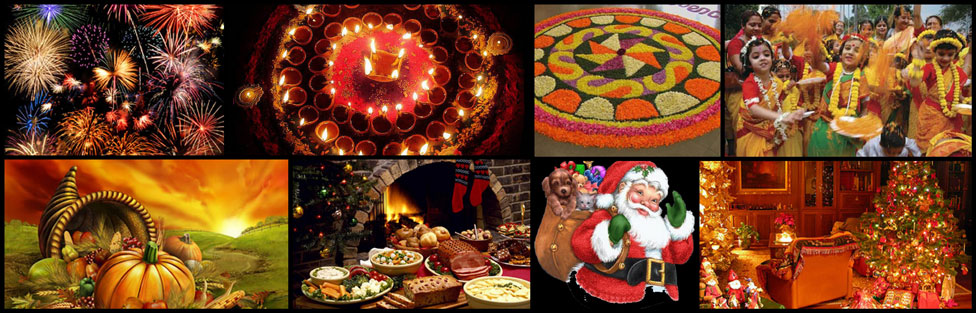
Festivals are an expressive way to celebrate glorious heritage, culture and traditions.  They are meant to rejoice special moments and emotions in our lives with our loved ones.  They play an important role to add structure to our social lives, and connect us with our families and backgrounds. They give us a distraction from our day to day, exhausting routine of life, and give us some inspiration to remember the important things and moments in life.  Festivals were started to pass the legends, knowledge and traditions onto the next generation.

All festivals are cultural in one way or another.  There are many types of cultural festivals such as National, Religious and Seasonal.  They all serve the purpose of bringing happiness to our lives, and strengthen our sense of community.

National Festivals:  They connect us as a people of a nation.  National festivals connect citizens to important moments of a nation’s history such as: the founding day of a nation, our independence day or in Europe VE day (Victory of Europe during WWII) is celebrated throughout the continent, with many nations having a public holiday.  They solidify patriotic spirits in the society.

Religious Festivals: religious festivals are important for families.  To keep this simple we can all agree that religious festivals help us to teach principles and ethics to our next generations.  All different religious festivals bring the same message of love, tolerance and understanding.  On these occasions we express our gratitude to God, for the special thing or event that originated on this particular festival.

Seasonal Festivals: Seasonal festivals reflect attitude of people towards nature.  These festivals are important because they are related to food supply.  Human beings should adore the nature and acknowledge its beneficence before partaking any of its gifts.

Overall in simple terms, universally all festivals are related to harmony, peace and happiness.